

Uncertain America

It happened so fast, one minute, stepping into an icy groove for my foot, the next, flat on my ass. With one hand still looped in my dog’s leash handle, I tried to get my feet up from under me, but the ice was as slick and smooth as a rink. Slowly, I rose, lifting myself with the help of a nearby SUV’s rearview mirror.
My dog stood only a few feet from the cookie jar with a look that said, “What are you doing down there?”
Maybe 20 feet away, two people stood talking. I could hear a dog barking as its owner shoveled the walk on the sunnier side of the street behind me. No one asked if I was okay.
We are digging our way, slowly, out of an ice storm. Richmond streets are sheets of ice, people are trapped in their homes, cars stuck behind mounds of heavy, icy snow.
At this same moment, in frigid ice and snow much like this, we are seeing communities in Minneapolis come together and fight back against the brutality of ICE in human form to protect their neighbors. On slippery streets, with whistles, with phones, with bravery and heart.
How quickly life can come out from underneath us, no longer in our control. How quickly we want a return to normal. How swiftly we say we are okay, without even checking to see if it’s true.
The truth is a slippery thing.
A couple of weeks ago, at the VMFA, I heard the artist and sculptor Nick Cave talk about his work and process. As he sat on the stage, a screen behind him flipped through images and videos of decades of his work and his famous Soundsuits, unreal and familiar shapes, human forms, but tuba-like. Shimmery, long and tall shaking pom-pom shapes, or sleek shark-suit patterns with heads like scrubber brushes. Flowers blooming from bodies. The ordinary made magical, powerful, terrifying and beautiful.
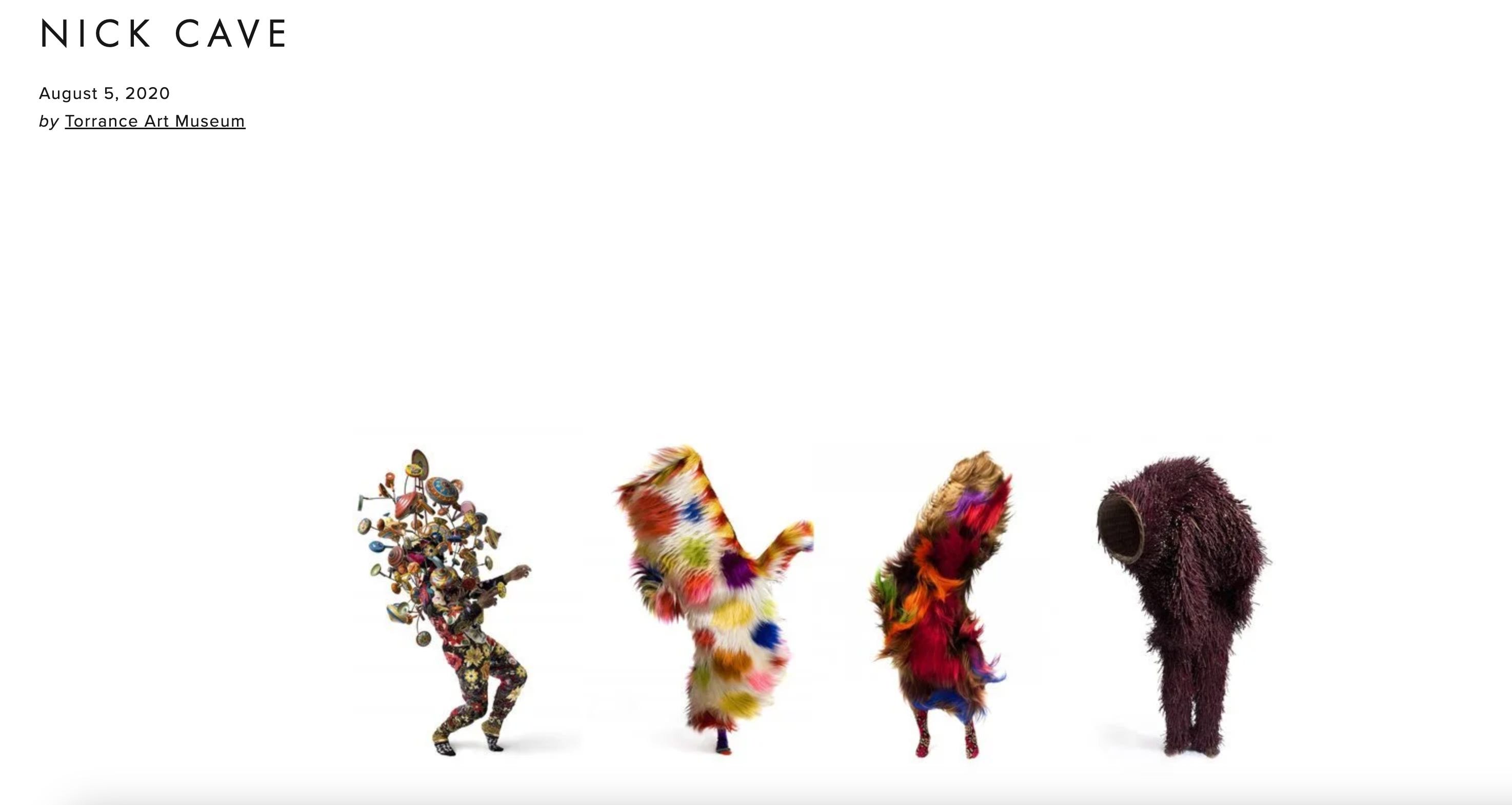
I first saw his work in 2015 in Dresden, in a complex of warehouses renovated into conference and gallery spaces, one of which was Slaughterhouse-Five. At the time, I’d only heard of the musician Nick Cave, I had no knowledge of this Nick Cave’s work and wow, what a wild and wonderful exhibit to encounter in what once was such a bleak space.
In Richmond, he talked about how art saved him, and the need to share his voice. The Soundsuit emerged slowly after watching the footage of the brutal beating of Rodney King by the LAPD:
“I started thinking about myself more and more as a black man – as someone who was discarded, devalued, viewed as less than. I started thinking about the role of identity, being racially profiled, feeling devalued, less than, dismissed. And then I happened to be in the park this one particular day and looked down at the ground, and there was a twig. And I just thought, well, that’s discarded, and it’s sort of insignificant. And so I just started then gathering the twigs, and before I knew it, I had built a sculpture.”
I struggle with how to digest this moment, what to look for, what to gather. The stream of truly horrifying news, images, videos find me, leave me stunned and numb. I’m trying to write about it, saving lists of what to do, how to act, who to contact, how to resist, how to help, but it never feels enough. Richmond feels like a simulation, like living on a soundstage of quaint neighborhoods and people performing safety.
Yet, at the edges, in the counties, we know ICE is circling, taking people indiscriminately. Just this week, plans for an ICE detention center in Hanover County were met with hundreds of protesters. For a moment, these plans have been beaten back, but it is far from over.
I keep trying to solve this puzzle of why to stay in America. For decades, I’ve been searching for major pieces–safety, mental health, morality, functional systems and transportation, gun control, vaccines, affordable housing, functional roads, homelessness, gerrymandering, data centers sucking us dry of resources, environmental protections, freedom of speech, freedom to move, to be, to love, to live.
For Black and Brown bodies in this country, unjustified violence, degradation and state-sanctioned murder has been well documented, reported, shared; the role of whiteness, supremacy, cruelty and power is not new. We will arrive in this space over and over again until we fully face who we are.
So much of being American is tied up in this idea of a dream–having one, achieving one, making your life better. Of course, the truth is that dream was a sales pitch which brought my Lebanese, French, Irish, Albanian relatives over here more than a century ago. The dark side of that dream, the fuel, is greed, disenfranchisement, and extreme cruelty.
As someone of limited means, living alone, the idea of leaving feels impossible, yet so does a future here. Options for surviving without being made numb by the daily dump of the undoing of democracy and human kindness is a Gordian Knot. As so many writers and artists and survivors have told us over and over: there is no space to dream in the midst of an authoritarian regime. Over time, with each brutality we have allowed, we have discarded our better selves and are left with the nameless and faceless men of nightmares.
Lately, a piece that has taken up more and more space in my heart and mind is values, humanity and morality. People are defending gestapo tactics: rounding up American citizens, shooting people to death and disappearing children. We have argued our culture into a corner, and have allowed everything to be up for debate. We are slipping away from one another, the metaphorical ground beneath our feet uncertain, frightening, deadly.
Decades ago, I read Milan Kundera for the first time. The Unbearable Lightness of Being is a love story and a philosophical one, but also has a magical and comic quality to it. It is also about a place and a people, specifically Prague after the Soviet invasion. I’ve been thinking about the book a lot lately–the absurdity of power, the emptiness, the violence, the ruin of careers and people. There are more than enough brilliant lines to quote, but this one suits:
“A person who longs to leave the place where he lives is an unhappy person.”
― Milan Kundera, The Unbearable Lightness of Being
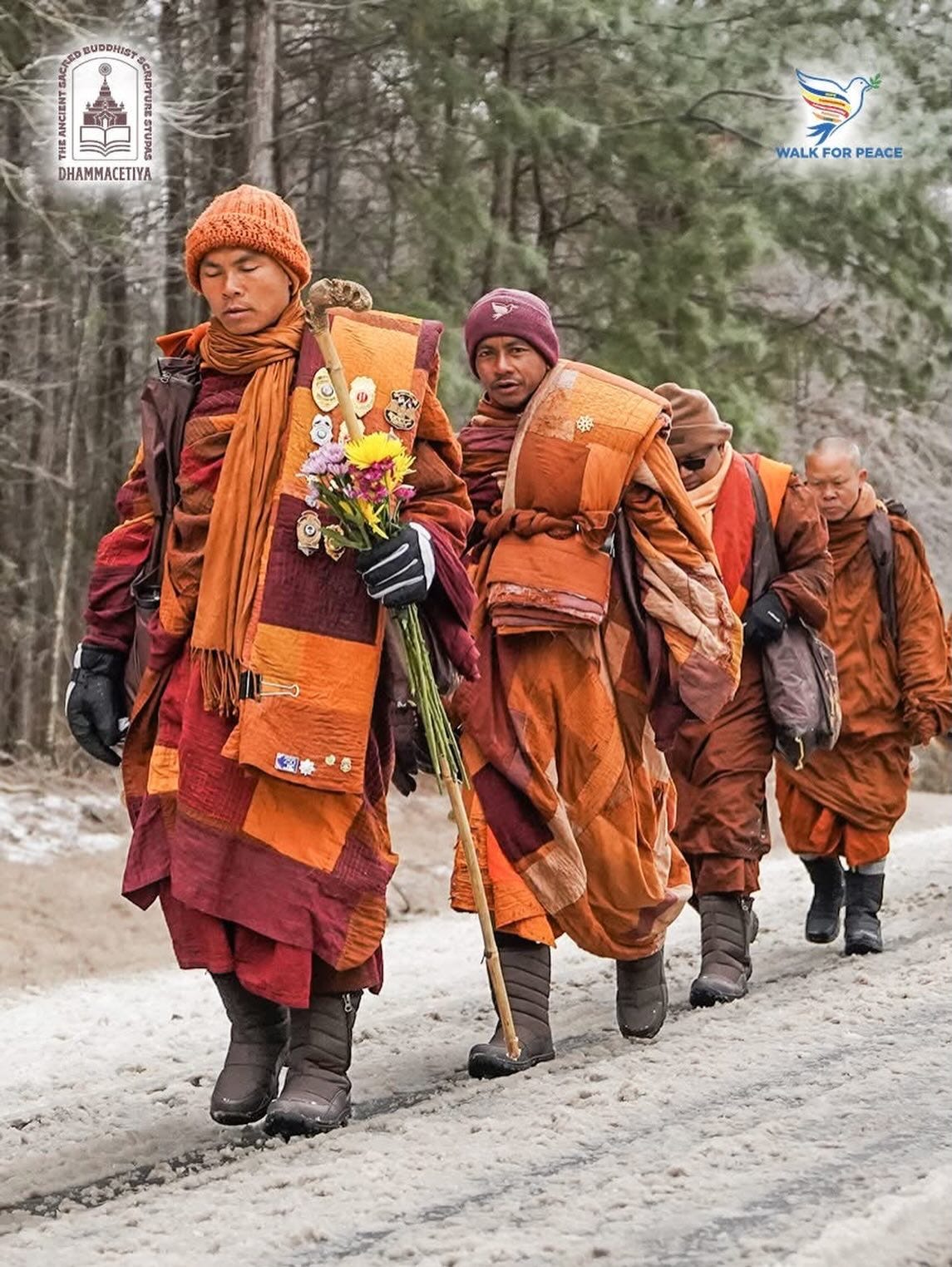
I’d like to end this on an up, a hopeful note. The best I can come up with is this–a group of Buddhist monks have been on a 2,300 mile Walk for Peace from Texas to Washington, DC. The intent of their journey is to show that peace and compassion is possible. They have been relying on the kindness of strangers to give them shelter and protection along their journey. Thousands of people have stood on the side of highways to greet them, to give flowers and offer support, food and shelter.
Today, day 100, the monks will arrive in Richmond and I hope to catch a glimpse, even if the street is icy and my next step uncertain.
Some better things and ways to help:
My friend Ty’s sister lives in Minneapolis and he has shared some community resources we can support:

Author/friend/mentor Amanda Montei also has shared a ton of ways to help:

I feel so many of these same sentiments so deeply. I feel called to recommend "My Monticello" by Jocelyn Johnson. Perhaps it's because you're writing from Richmond and Johnson sets her eponymous story in a dystopian Charlottesville in the barely-distant future, but I'm reminded of what it is like to want to run but to have no place to go. Thank you for the photo of the monks, which strangely acts as an antidote to anxiety.
This is a gorgeous essay, Shannon. Thank you for sharing